Immigration law is one of the most complex and documentation-heavy areas of legal practice. Attorneys and paralegals often manage hundreds of active matters at once, each with strict deadlines, evolving regulations, and extensive supporting evidence.
Every petition involves forms that must be filled out with absolute precision, while maintaining consistent communication with clients who may be located across different time zones or speak different languages. With so many moving parts, even small inefficiencies can lead to costly delays or compliance issues.
That’s where immigration law management software comes in. These specialized systems are designed to streamline repetitive administrative work, keep case data organized, and ensure critical deadlines never slip through the cracks.
This article explores what immigration practice management software does, which features matter most, how leading platforms compare, and how firms can choose and implement the right system for their specific workflows.
Whether you’re a solo practitioner or managing a large team, the goal is the same: improving accuracy, efficiency, and client experience through better technology.
What Is Immigration Law Management Software?
This type of software is built to handle the unique operational demands of immigration firms, far beyond what general legal platforms typically offer.
While traditional practice management tools focus on time tracking, billing, and broad case oversight, immigration-specific systems integrate specialized form libraries, automated petition tracking, and compliance tools tied to agencies like USCIS.
They centralize every aspect of a case, from intake and document submission to communication with clients and government updates, helping attorneys manage multiple petitions efficiently while maintaining full accuracy and transparency across every stage of the process.
Features to Look For
At Law Firm Velocity, we’ve seen how difficult it can be for immigration firms to evaluate software without getting lost in features or marketing claims.
Every firm’s workflow is different, but the best systems are those that directly solve operational bottlenecks, whether that’s managing deadlines, standardizing client intake, or keeping communication clear across multiple cases.
In our experience, success comes from matching technology to real-world process challenges rather than chasing every possible feature. Below are some of the capabilities that consistently make a difference for immigration law firms.
Case Management & Workflow Automation

Strong case management sits at the core of any effective software. It enables firms to track every petition, filing, and client milestone in one place, ensuring nothing slips through the cracks.
Automated workflows take this further by standardizing repetitive steps, such as sending document reminders or scheduling follow-ups, so attorneys and paralegals can focus on higher-value work.
When configured correctly, these tools help create consistency across staff, reduce manual data entry, and make it easier to manage a large caseload without sacrificing accuracy or oversight.
Form Libraries & e-Filing Integration
Given the form-intensive nature of immigration law, built-in access to comprehensive USCIS and Department of State libraries is a must. The best systems offer dynamic auto-fill capabilities that pull client data directly into forms, dramatically cutting preparation time and minimizing errors.
Some also support direct e-filing with government agencies, reducing the need for manual uploads or printing. This combination of automation and integration not only improves efficiency but also ensures that lawyers are always working with the latest form versions and filing protocols.
Client Portal
A well-designed client portal can transform how firms communicate with their clients. Instead of exchanging endless emails or scanned forms, clients can securely log in to upload documents, answer questionnaires, and view real-time updates on their case status.
This transparency helps reduce anxiety and confusion, particularly for clients navigating complex visa or residency processes. For firms, it also reduces administrative follow-up and ensures that communication and documentation stay organized in one accessible location.
Document Management

Immigration cases generate vast amounts of documentation like passports, visas, financial records, and supporting evidence. Each one carries strict confidentiality requirements.
Document management tools provide secure cloud storage with version control, permission settings, and audit trails to maintain compliance with privacy standards. Many platforms also allow in-app document requests and digital signatures, eliminating the back-and-forth of email attachments.
This centralized approach simplifies retrieval, improves team collaboration, and enhances security for both attorneys and clients.
Compliance Tracking
Compliance management is critical in immigration law, where missed deadlines or incomplete documentation can have serious consequences. Good software includes built-in alerts for visa expirations, filing deadlines, and regulatory changes, helping teams stay proactive.
It can also streamline processes like I-9 verification or Labor Condition Applications by automating recurring checks and storing all relevant records in one place. These tools act as both a safety net and a compliance roadmap, ensuring the firm meets every legal requirement without extra manual oversight.
Multi-Language Communication Tools
Given the diversity of clients, language accessibility is often an overlooked yet essential feature. Platforms that offer multilingual interfaces, translated questionnaires, or integrated translation tools can significantly improve client engagement and reduce misunderstandings.
Even basic features, like automated notifications in the client’s preferred language, can make a major difference in client satisfaction and response time. This capability not only strengthens communication but also demonstrates cultural competence and inclusivity.
Reporting & Analytics

Modern firms are increasingly data-driven, and reporting tools provide the insights needed to measure performance and improve operations. Custom dashboards can highlight trends in case outcomes, average processing times, and staff workload, helping decision-makers identify bottlenecks or resource gaps.
Over time, analytics reveal where efficiencies can be gained, whether through process changes, automation, or staff allocation. These reports also support stronger business forecasting and accountability, giving firm leaders a clearer view of overall productivity and profitability.
Benefits for Law Firms
The most immediate advantage of adopting management software is the significant reduction in manual, repetitive work. Automated document generation and data entry minimize the risk of human error while saving hours that would otherwise be spent checking, retyping, or reformatting information across multiple forms.
With all client data, forms, and case notes centralized in one secure system, teams can access exactly what they need without sifting through email threads or shared drives. This organization directly translates into faster turnaround times, smoother filings, and a more professional client experience, especially when deadlines are tight or cases are complex.
Beyond efficiency, the collaborative value of these systems is hard to overstate. Attorneys, paralegals, and administrative staff can all work within the same platform, ensuring visibility into case progress and reducing internal communication gaps.
Built-in reminders and compliance tools help prevent missed deadlines and maintain adherence to regulations, while client portals create a structured, transparent space for document sharing and updates.
Together, these features allow firms to scale their operations confidently—delivering higher-quality work with fewer bottlenecks and a lower risk of compliance-related setbacks.
Top Platforms
Each immigration software platform takes a slightly different approach to balancing usability, automation, and depth of features. While all handle the essentials, some excel in customization and CRM tools, while others focus on scalability or ease of use.
The following summaries highlight key strengths and challenges shared by practitioners, helping firms identify which solution best fits their workflow and client needs.
Docketwise
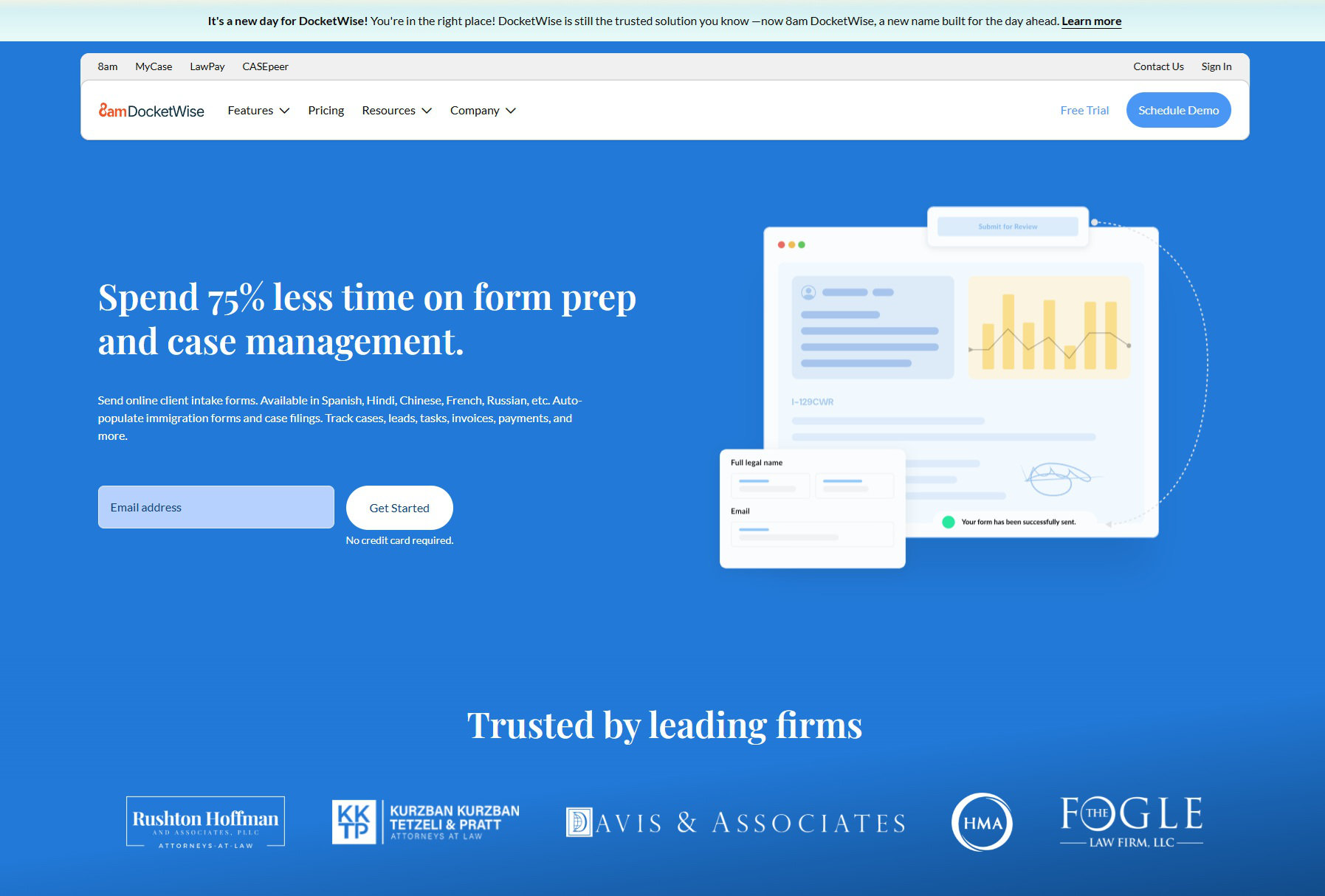
Docketwise is often seen as the most accessible starting point for firms new to immigration practice software. It has an intuitive interface, reliable form-filling tools, and wide adoption within the immigration law community.
It’s praised for being a well-rounded platform that covers the essentials, case tracking, questionnaires, and form automation, without requiring a steep learning curve.
That said, it has its limitations when handling larger or more complex corporate cases. The CRM and customization capabilities are comparatively weaker, and while customer service is friendly, post-implementation support can feel slow or unresponsive.
Its process automation requires workarounds rather than being natively built-in. In short, Docketwise offers strong usability and convenience, but firms seeking deeper customization or scalability may find it restrictive.
Camp Legal
Camp Legal is known for its flexibility and stronger CRM-style functionality. It provides more customization options than Docketwise, particularly when it comes to building tailored intakes and questionnaires. This makes it a solid fit for firms that want more control over their client engagement workflows.
While there isn't a lot of discourse about Camp Legal, the consensus suggests it’s a good alternative for firms that prioritize client management and intake over pure form automation.
The trade-off is that it may not be as plug-and-play as Docketwise, so firms should expect a slightly more hands-on setup process to get the most from its customization tools.
LollyLaw
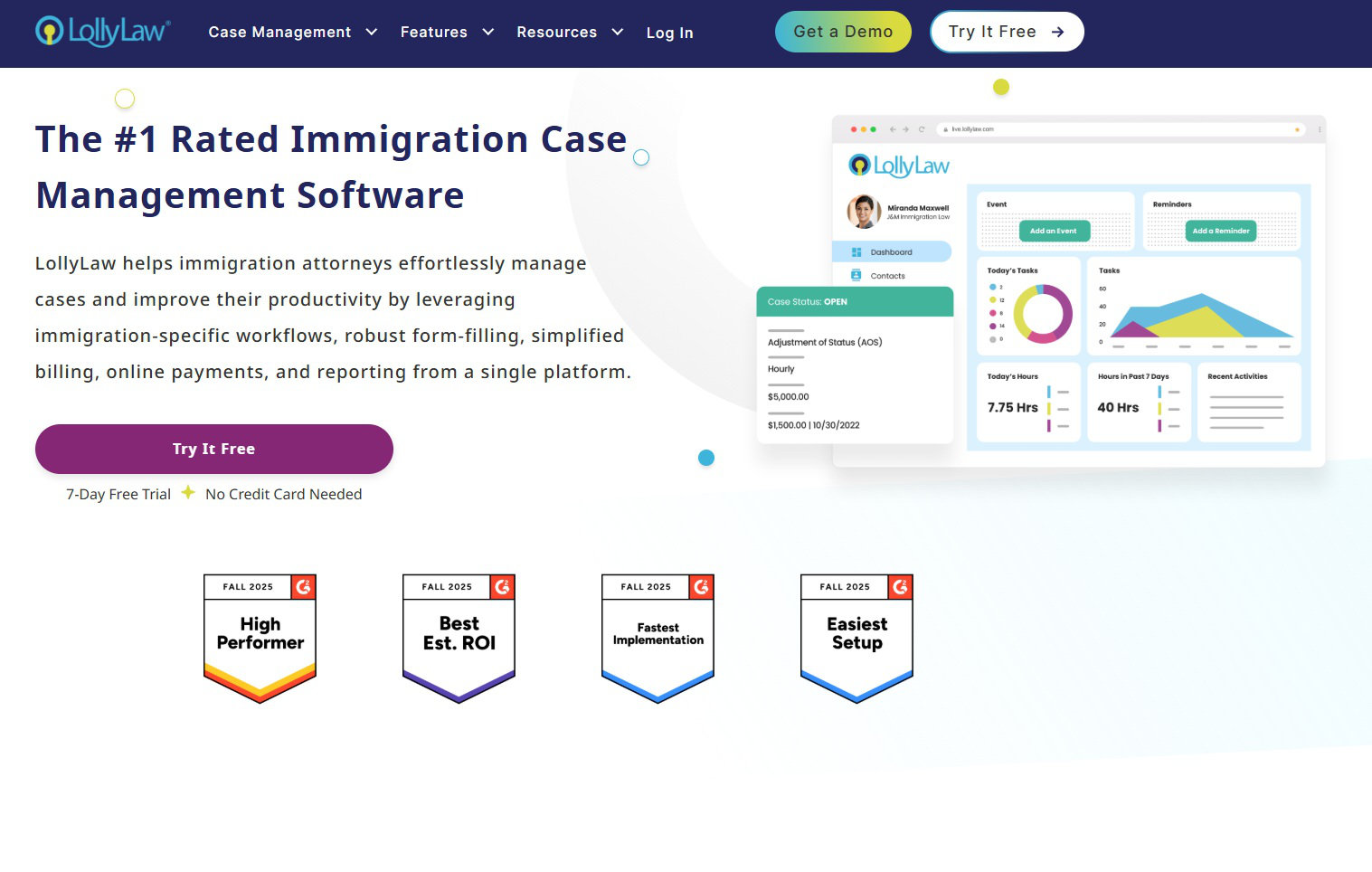
LollyLaw draws mixed reactions, with opinions ranging from highly negative to cautiously positive. Some appreciate its case management and task assignment tools, particularly for managing workflows or staff responsibilities. For a few, its automation features, like consular processing, worked well for high-volume firms with multiple members.
However, many describe LollyLaw as underperforming in nearly every area compared to competitors. Complaints are centered on clunky form handling, weak questionnaire functionality, and poor customer support.
Some users even find it harder to use than older systems, calling out overpromised marketing and limited reliability in. The result is a platform that seems to benefit process-oriented teams but frustrates those seeking smoother automation or dependable service.
INSZoom
INSZoom is recognized as one of the longest-standing players in the immigration software space, offering a comprehensive set of tools for forms, automation, and compliance tracking. Long-time users acknowledge its depth and coverage, especially for firms handling large case volumes or corporate clients.
Despite that breadth, INSZoom often receives criticism for being outdated and slow to modernize. Several practitioners mentioned sluggish support, poor user interface design, and limited integrations with third-party tools.
Ownership changes reportedly affected service quality as well. While the platform remains robust in capability, many find it cumbersome to use, ideal only for firms that value functionality over user experience.
eImmigration (by Cerenade)
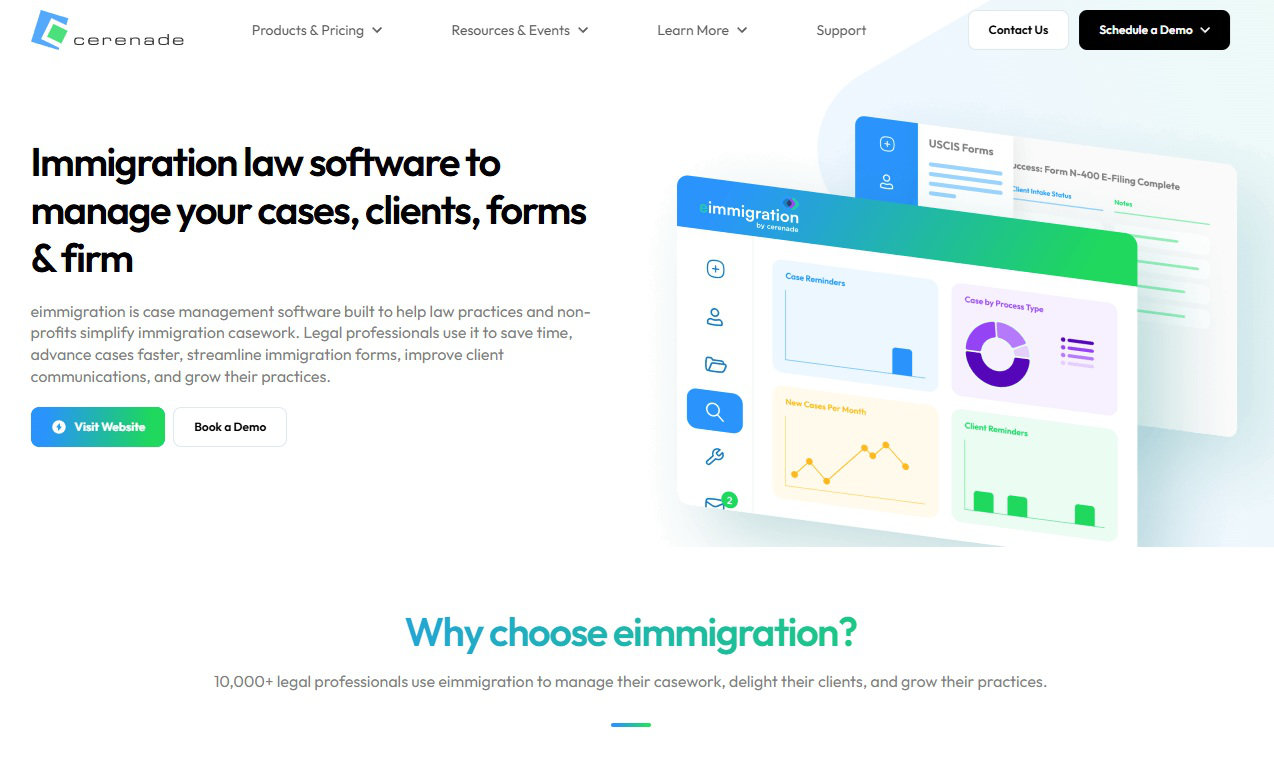
eImmigration is frequently described as one of the most feature-rich systems available, and many users report strong satisfaction once they’ve adjusted to its complexity.
It’s commended for having the best form library and customization options in the category, along with standout e-filing functionality and comprehensive case management tools. Several users consider its customer support the most responsive among major providers, and firms that fully commit to it often report excellent results.
The drawbacks are tied to its ambition. Some find eImmigration overwhelming, especially early in adoption, and note that it requires time to configure properly. Others describe it as “too comprehensive,” with a steeper learning curve than simpler competitors.
Still, many agree that for firms willing to invest in setup and training, eImmigration delivers unmatched power and integration.
Implementation Best Practices
At Law Firm Velocity, we often see that the success of immigration law software hinges less on the platform itself and more on how it’s implemented. Software alone won’t fix broken workflows, which is why we start by mapping out a firm’s intake procedures, document handling, and client communication processes before introducing any system.
Conducting a thorough workflow audit helps identify bottlenecks and ensures the platform aligns with real-world operations.
From there, a phased rollout paired with comprehensive staff training allows teams to adapt gradually, while ongoing review and process optimization post-adoption make certain the software continues to deliver efficiency gains, reduce errors, and enhance overall productivity.
Future-Proofing Your Law Firm
Over the years, we’ve helped dozens of firms modernize their operations, and immigration firms stand to benefit more than most from the right technology. Adopting specialized software allows firms to scale responsibly, handling higher case volumes without sacrificing accuracy or compliance.
It streamlines workflows, improves collaboration across attorneys, paralegals, and clients, and provides real-time visibility into case progress and deadlines.
If your team is ready to reduce administrative burden and strengthen regulatory compliance, it’s worth taking a close look at your current processes and exploring software solutions that fit your firm’s unique workflow and growth goals. Schedule a consultation with our team to learn more.